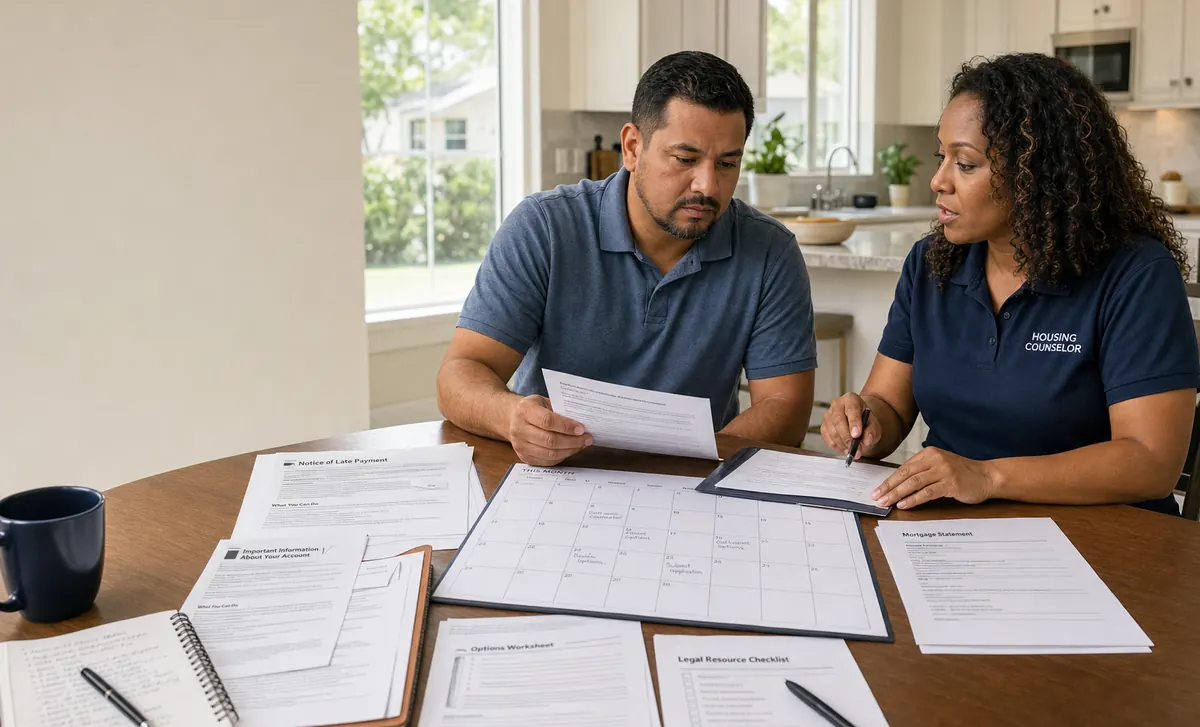
Foreclosure is a legal process allowing lenders to recover a loan balance from borrowers who stopped payments by forcing the sale of the property securing the loan. For homeowners in Houston facing potential foreclosure, understanding the local process and exploring deed in lieu vs short sale options is crucial for making informed decisions about their financial future. This guide will walk you through every aspect of the Houston foreclosure process, providing the knowledge and resources needed to navigate this situation.
The emotional and financial stress of foreclosure can be overwhelming. However, accurate information about your rights, timeline, and alternatives can help you make the best decisions. Whether you're facing foreclosure or want to understand the process to prevent it, this article will serve as your complete resource for understanding foreclosure in Houston and Harris County.
Overview of Houston Foreclosure Process
The foreclosure process in Houston allows lenders to recover outstanding mortgage debt while providing borrowers with rights and opportunities to resolve delinquency. Understanding each stage of this process is essential for homeowners to protect their interests and explore options.
The foreclosure process in Houston has five key stages: mortgage delinquency, Notice of Default, Notice of Sale, foreclosure auction, and eviction (if necessary). Each stage has specific legal requirements and timeframes for lenders and homeowners. The process can take 2-6 months, depending on the homeowner's response and legal challenges.
Texas is a non-judicial foreclosure state. This is so most foreclosures can proceed without court intervention if the lender follows the Texas Property Code procedures. This process is typically faster and less expensive for lenders but gives homeowners fewer opportunities for court review.
The foreclosure process in Houston is governed by state law and the mortgage contract. Lenders must comply with legal requirements, including notice procedures and timing, or the foreclosure may be invalid. Homeowners must understand their rights and seek professional help during foreclosure.
Texas Foreclosure Laws and Regulations Houston
The Texas Property Code, specifically Chapter 51, outlining non-judicial foreclosure procedures. Under Section 51.002, lenders can foreclose on a property when the borrower defaults on their mortgage, provided the deed of trust contains a power of sale clause, standard in most Texas mortgages.
In Texas, the non-judicial foreclosure process allows lenders to foreclose without a lawsuit or court order, significantly streamlining the process compared to judicial foreclosure states. However, lenders must comply with strict notice requirements and procedural safeguards to protect homeowners' rights. Texas Property Code Section 51.0076 requires specific content in foreclosure notices and establishes minimum timeframes for the process.
A key aspect of Texas foreclosure laws is the limited right of redemption. Unlike many states, Texas does not provide homeowners with a post-sale right of redemption for mortgage foreclosures. This means that once the foreclosure sale is completed, the homeowner generally cannot reclaim the property by paying off the debt, except in limited circumstances involving tax foreclosures or certain HOA (Homeowners Association) foreclosures.
Texas Property Code Section 51.002 requires foreclosure sales to be "fair and conducted in good faith," including proper advertising, conducting the sale at the designated time and location, and complying with statutory requirements. Violations can invalidate a foreclosure sale and allow homeowners to challenge it in court.
The Texas Property Code provides protections for military servicemembers under the federal Servicemembers Civil Relief Act, which can delay or halt foreclosure for active-duty personnel. Texas also has specific requirements for foreclosures involving reverse mortgages and certain home equity loans, including HELOCs.
Houston Foreclosure Process Timeline
The Houston foreclosure timeline follows specific legal requirements for minimum stage durations. However, the actual timeline can vary based on the homeowner's actions and complications.
Mortgage Delinquency occurs during the first 30-120 days when homeowners fall behind on payments. The foreclosure process begins when a homeowner becomes delinquent on their mortgage payments. Most lenders provide a grace period of 10-15 days after the due date before assessing late fees. After 30 days of delinquency, the loan is reported to credit agencies.
Notice of Default takes a minimum of 20 days. The lender must send a Notice of Default allowing the borrower at least 20 days to cure the default by paying all past-due amounts plus fees and costs. This notice must be sent by certified mail to the borrower's last known address and specify the exact amount and deadline for payment.
Notice of Sale requires a minimum of 21 days. If the homeowner fails to cure the default within the 20-day period, the lender may proceed with foreclosure by filing and posting a Notice of Sale. This notice must be posted at the county courthouse door at least 21 days before the foreclosure sale.
Foreclosure Auctions occur on the first Tuesday of the month between 10 AM and 4 PM. Texas law mandates these sales at the courthouse area of the property’s county. In Harris County, auctions are held at designated locations including the Harris County Courthouse.
If not, the new owner may begin eviction proceedings, involving a 3-day notice to quit, followed by filing an eviction lawsuit in Justice of the Peace court if the homeowner doesn't vacate.
The foreclosure process typically takes 2-6 months from default to sale for Houston homeowners. However, this timeline can be extended if the homeowner contests the foreclosure or if there are legal complications.
Types of Foreclosure Process Houston
Texas uses non-judicial foreclosure, allowing lenders to foreclose on properties without court intervention if they follow the Texas Property Code requirements. This process is faster and cheaper for lenders compared to judicial foreclosure, typically taking 2-6 months when all legal requirements are met.
In Texas, judicial foreclosure is less common but may be used in certain circumstances, such as when the deed of trust lacks a power of sale clause, when there are title issues requiring court resolution, or when the lender seeks a deficiency judgment against the borrower. In judicial foreclosure cases, the lender must file a lawsuit and obtain a court order before conducting the foreclosure sale, which extends the timeline and increases costs for all parties.
Judicial foreclosure may be needed for HOA lien foreclosures, certain tax foreclosures, and situations with multiple lien holders needing court supervision to determine priority and sale proceeds distribution. It's important to understand the applicable foreclosure type because it affects your rights and timeline for exploring alternatives.
Steps to Avoid Foreclosure in Houston
Homeowners facing foreclosure have options to avoid it and protect their credit and housing stability. The key is to act quickly and explore alternatives before the process advances too far.
In loss mitigation scenarios, homeowners have multiple paths. Reinstatement involves paying all past-due amounts plus allowable fees to bring the loan current. Forbearance provides a temporary reduction or suspension of mortgage payments. Repayment plans create agreements with the lender to catch up on missed payments by adding portions of past-due amounts to future payments. Loan modifications permanently change loan terms, such as reducing the interest rate or extending the loan term. For FHA loans, partial claims involve receiving a loan from HUD to cover past-due amounts.
Homeowners have different options in selling their homes. Traditional sales involve listing the property with a real estate agent to sell at market value when the home's value exceeds the mortgage balance. Direct cash home buyers provide fast alternatives when time is limited, often closing in 7-14 days and purchasing homes as-is.
Several options exist in alternative resolution scenarios. Bankruptcy filing can temporarily halt foreclosure proceedings through an automatic stay, providing time to reorganize finances. Chapter 13 bankruptcy may allow homeowners to catch up on missed payments through court-approved repayment plans. Deed in lieu of foreclosure involves voluntarily transferring ownership to the lender to satisfy mortgage debt. Short sales allow selling the property for less than the outstanding mortgage balance with lender approval.
Role of Lenders and Notices in Houston Foreclosure Process
Lenders play a central role in the Houston foreclosure process. However, they must comply with legal requirements or risk invalidation. Understanding the lender's obligations can help homeowners identify procedural errors and protect their rights.
The lender's primary responsibility is to provide proper notice to homeowners at each stage of the foreclosure process. The Notice of Default must contain specific information required by Texas law, including the amount needed to cure the default, the payment deadline (at least 20 days from the notice date), and the consequences of failing to cure it. This notice must be sent by certified mail to the borrower's last known address.
The Notice of Sale must include detailed information, such as the date, time, and location of the foreclosure sale, a legal description of the property, the original loan amount and current balance, and the sale terms. This notice must be filed with the county clerk, posted at the courthouse door, and published in a newspaper for 3 consecutive weeks, with the first publication at least 21 days before the sale date.
Homeowners should review all notices from their lender to ensure compliance with legal requirements and understand their rights and deadlines. Procedural errors in the notice process can challenge the foreclosure and potentially halt the proceedings. Keep copies of all correspondence and document the dates of notice receipt.
Details of the Houston Foreclosure Auction Process
In Houston, foreclosure auctions occur at designated Harris County courthouses, usually on the first Tuesday of each month between 10:00 AM and 4:00 PM. These public auctions allow anyone with sufficient funds to bid on foreclosed properties, attracting real estate investors and bargain hunters.
The auction process begins with the Notice of Sale reading, which includes the property's legal description and sale terms. Bidding usually starts at the amount owed to the foreclosing lender, but bids don't have to reach this amount. All bidders must pay the full purchase price immediately with cash or certified funds, as personal checks aren't accepted.
The auction winner, the highest bidder, receives a trustee's deed to the property, transferring ownership immediately. The trustee holds any excess funds from the sale after paying the foreclosing lender and other valid liens, and these funds for the former homeowner. If the sale price is insufficient to cover all debts, the lender may pursue a deficiency judgment, depending on the loan type and foreclosure circumstances.
Properties sold at foreclosure auctions are sold "as-is" with no warranties about the condition. Bidders should be prepared for potential title issues, property damage, or existing tenants needing eviction through separate legal proceedings.
Homeowners’ Rights During Foreclosure in in Houston
Homeowner rights during foreclosure ensure fair treatment and opportunities to resolve delinquency before losing the home. Understanding these rights is crucial for protecting your interests and exploring options.
In property retention scenarios, homeowners maintain multiple rights. The right to reinstate allows homeowners to stop foreclosure by paying all past-due amounts plus allowable fees and costs before the foreclosure sale. The right to cure enables homeowners to stop foreclosure by bringing their loan current during the 20-day notice period after receiving the Notice of Default. The right to challenge allows homeowners to contest foreclosure in court if there are procedural errors or violations of mortgage contract terms.
In financial recovery situations, homeowners retain specific rights. Homeowners receive the excess funds from the foreclosure sale if it generates more money than needed to pay off the mortgage and other liens, under the right to excess proceeds. Fair debt collection practices protect homeowners from harassment and abusive practices by debt collectors under the Fair Debt Collection Practices Act. Lenders are required to provide accurate details about amounts owed, payment history, and payoff amounts under the right to receive accurate information.
Impact of Houston Foreclosure Process on Credit
Homeowners should understand the long-term consequences of foreclosure for credit scores and future housing opportunities. A foreclosure typically causes an 80-160 point credit score drop and remains on the credit report for 7 years from the date of the first missed payment.
The impact on future mortgage eligibility varies by loan type and lender requirements. Conventional loans typically require a waiting period of 4-7 years after foreclosure, while FHA loans may be available after 3 years with acceptable credit and employment history. VA loans may be available after 2 years, depending on the foreclosure circumstances.
Rebuilding credit after foreclosure requires a strategic approach: establish new positive payment history, keep credit utilization low, and avoid new negative items. To establish a positive payment history, secured credit cards, credit-builder loans, and becoming an authorized user can help. Regularly monitor credit reports for errors and dispute any inaccuracies.
The long-term financial impact extends beyond credit scores to include higher interest rates, larger down payment requirements, and stricter income and asset verification for future mortgages. Some employers and landlords also check credit reports, potentially affecting job and rental opportunities.
Local Resources for Foreclosure Process Houston
Houston homeowners facing foreclosure can access local resources and legal aid organizations that help them understand their options and navigate the process. These resources are invaluable for homeowners who cannot afford private legal representation.
Several organizations provide help in legal assistance situations. Houston Volunteer Lawyers (713-228-0735) offers free legal assistance to low-income Harris County residents facing foreclosure, including representation and advice on defense strategies. Lone Star Legal Aid (1-800-733-8394) offers free legal services to eligible low-income residents, including foreclosure prevention and defense assistance.
In housing counseling scenarios, multiple resources exist. BakerRipley (713-273-3500) provides HUD-certified housing counseling services, including foreclosure prevention, budgeting assistance, and help negotiating with lenders. The Texas Department of Housing and Community Affairs(512-475-3800) offers information about state and federal programs for homeowners facing foreclosure.
Consumer Credit Counseling Service of Greater Dallas (800-856-0222) provides foreclosure prevention counseling and debt management services to Harris County residents. Harris County Community Services Department (713-274-5000) offers information about local assistance programs and referrals.
FAQ About Foreclosure Process Houston
Houston foreclosure statistics show that Harris County sees varying monthly foreclosure filings according to RealtyTrac and ATTOM Data Solutions, with rates fluctuating based on economic conditions. Foreclosure rates vary by economic conditions and neighborhood, with the Houston metropolitan area generally seeing declining rates since the 2008 financial crisis.
COVID-19 affected the foreclosure process through temporary moratoria for federally-backed mortgages (FHA, VA, USDA, and loans from Fannie Mae or Freddie Mac) through 2021. Many lenders implemented their own temporary forbearance programs. While most moratoria have ended, many lenders continue to offer enhanced loss mitigation options for borrowers experiencing pandemic-related hardships.
Houston neighborhoods with higher foreclosure rates typically have older housing, lower median incomes, and more adjustable-rate mortgages. Historically, certain areas have experienced higher foreclosure rates, often correlated with economic factors like job losses.
Conclusion
Understanding the foreclosure process Houston homeowners face is essential for making informed decisions during this challenging financial situation. Each step of the process, from initial mortgage delinquency to the final foreclosure auction, involves specific legal requirements, deadlines, and opportunities for homeowners to protect their interests and explore alternatives.
The key to successfully navigating foreclosure is to act quickly and seek help from qualified professionals who can evaluate your specific situation and help you understand all available options. Whether you can work out a loan modification with your lender, sell your home to avoid foreclosure, or need to prepare for the foreclosure process, having accurate information about your rights and resources is crucial for making the best decisions for your financial future.
.jpg)