
.jpg)
Selling a Texas rental with tenants still in place is mainly a lease-transfer problem. The lease leads. Start by reading the signed lease, confirming rent and deposit records, and deciding whether your buyer can accept the tenant at closing. Document it.
Quick answer
If you are selling a rental property with tenants in Texas, you can sell the property, but the lease usually stays with the home. A fixed-term tenant normally remains until the lease expires. A month-to-month tenant can be ended only through the notice required by the lease and Texas law. Use a traditional listing when the tenant will cooperate with showings and the property can survive inspection. Use a direct cash sale when access, repairs, financing delays, or tenant conflict would put the closing at risk.
| Decision input | How to use it |
|---|---|
| Fixed-term lease | Market the property to buyers who will inherit the tenant, rent amount, deposit, and remaining lease term. |
| Month-to-month tenancy | Check the lease notice clause before promising a vacant delivery date to a buyer. |
| Tenant cooperation | Choose the sales path after you know whether the tenant will allow photos, showings, inspection, and appraisal access. |
In Texas, it is possible to sell a tenant-occupied property. The sale still requires lease review, written communication, and choosing the right sales strategy for the tenant's occupancy.
This article covers selling a rental property with a tenant in Texas, including lease review, tenant communication, showings, disclosures, and the tradeoffs between a traditional sale and a direct cash sale.
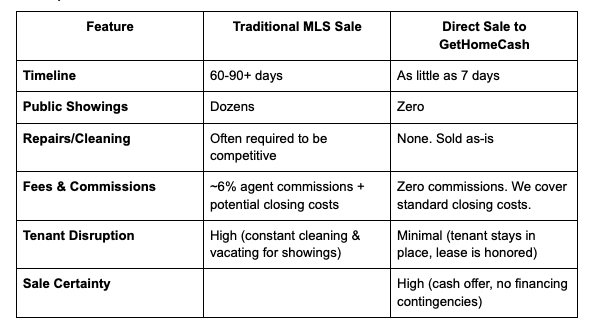
Comparison of Traditional Sale and Direct Cash Sale
Can You Legally Sell a Tenant-Occupied Property in Texas?
Yes. A Texas owner may sell the rental property, but the buyer receives the property subject to the tenant's existing rights. The practical question is not whether you can sign a contract; it is whether the contract, title work, deposit transfer, and access schedule match the lease.
Read the lease before you accept an offer. Confirm the tenant name, lease start and end dates, monthly rent, late fees, pet terms, renewal clause, entry clause, security deposit, and any written notices already sent. Put those items in a one-page lease summary for the buyer so nobody relies on memory at closing.
Texas Property Code provisions on landlord-tenant matters are published by the state, including rules for security deposits in Texas Property Code Chapter 92. Use the statute, the lease, and professional advice for the exact notice language in your transaction.
Disclaimer: This article is for informational purposes only and is not legal or financial advice. Laws and regulations can change, and complex tenant disputes may require a qualified Texas real estate attorney or financial advisor.
Texas Landlord and Tenant Rights During a Sale
The lease controls the sale calendar. No shortcuts. A buyer who wants possession on closing day needs a tenant plan before the contract is signed, not after the appraisal or final walkthrough.
Your Rights and Obligations as a Landlord
As a Texas property owner, you can market and sell the property. You can also request access for photos, buyer visits, inspections, and appraisals when the lease allows entry and the notice is reasonable.
- Right to Sell: You may sell the property even when the tenant remains in possession.
- Planning assumption — this number is not a quote, deadline, valuation, or promise; verify it in writing before relying on it.Right of Entry: Follow the lease entry clause first. If it says 24 or 48 hours, use that standard. If the lease is silent, give written notice early enough for the tenant to plan, identify who will enter, and schedule access during reasonable hours.
- Deposit Handling: Reconcile the security deposit before closing and show the amount on the closing statement or a separate transfer receipt.
Your obligations are just as specific: honor the current lease, avoid unannounced entry, disclose the tenant's occupancy to the buyer, transfer rent prorations correctly, and give the buyer copies of the lease, amendments, ledgers, notices, and move-in condition records.
Tenant's Rights When Selling the Property
Tenant rights shape pricing, buyer pool, and access. A tenant does not lose quiet enjoyment because the property is listed for sale.
- Quiet Enjoyment: Repeated last-minute showings, lockbox surprises, or visits outside the lease rules can create a dispute and make the property harder to sell.
- Fixed-Term Lease: If the tenant has a lease with a specific end date, the buyer should assume the tenant remains until that date unless the tenant signs a separate agreement to leave earlier.
- Month-to-Month Lease: If the tenancy is month to month, check the lease and Texas notice rules before advertising the home as vacant or deliverable by a certain date.
Lease Review Before Listing
Review the signed lease before scheduling showings or negotiating buyer possession. Mark four items: access notice, lease end date, renewal options, and deposit amount.
Pay special attention to these clauses:
- Sale of Property Clause: Some leases explain what happens if the owner sells during the lease term. Do not assume the clause gives an automatic right to end the tenancy.
- Planning assumption — this number is not a quote, deadline, valuation, or promise; verify it in writing before relying on it.Access or Landlord Entry Clause: This clause sets the showing and inspection process. If it requires 48 hours' notice, build the listing calendar around 48 hours' notice.
- Renewal Clause: A buyer will price the property differently if the tenant can renew for another year at below-market rent.
- Deposit Clause: Match the lease deposit number to your ledger before closing so the buyer does not inherit a disputed balance.
Tenant Notice and Showing Plan
Tell the tenant before the first photographer, agent, or buyer arrives. A short written notice should state that you plan to sell, the lease remains in effect, how access requests will be made, and whom the tenant should contact with scheduling problems.
- Send a notice of intent to sell by email, mail, or the method required by the lease.
- Give a showing window policy: weekday evenings, Saturday blocks, or one grouped showing period each week.
- Confirm that the lease, rent due date, and repair reporting process remain unchanged unless the parties sign a new agreement.
- Keep copies of all notices, replies, declined access requests, and completed showings.
Tenant Cooperation and Incentives
Planning assumption — this number is not a quote, deadline, valuation, or promise; verify it in writing before relying on it.If the tenant's cooperation will affect value, price the incentive against the cost of delay. A $200 rent credit can be cheaper than a failed inspection slot, a cancelled appraisal, or another month of holding costs.
- Offer a temporary rent credit for keeping the property accessible during a defined showing period.
- Group showings into limited windows instead of interrupting the tenant several times a week.
- If you need the home vacant, negotiate a written cash-for-keys agreement with a move-out date, payment amount, condition standard, and key handoff process.
Choose Your Sales Path for Occupied Property Sales in Texas
Occupied rentals usually sell through one of two paths: an MLS listing that depends on showings and financing, or a direct sale to a buyer comfortable taking over the lease.
Path A: Traditional Sale (MLS Listing)
A traditional listing can work when the tenant pays on time, the lease documents are clean, and access will not damage the buyer experience. It is weaker when the home needs repairs, the tenant refuses reasonable access, or the buyer must move in immediately.
- Showings Coordination: Each showing needs notice, a confirmed time, and a tenant who understands who is entering the home.
- Property Condition: Buyer photos and inspection notes will reflect the tenant's housekeeping, furniture, pets, and stored items.
- Buyer Pool: Owner-occupant buyers may not wait for a lease to expire. Investor buyers will underwrite rent, lease term, and repair exposure.
- Closing Risk: Financing, appraisal, inspection repairs, and tenant access can each delay or cancel the contract.
Pros:
- Can reach buyers who pay a premium for a clean occupied rental.
- Works well when records are complete and the tenant is cooperative.
- Lets the seller test market price before accepting a lower certainty offer.
Cons:
- Takes 60-90+ days from listing to closing in many ordinary transactions.
- Depends on tenant cooperation for photos, showings, inspections, and appraisal access.
- Agent commissions commonly cost 5-6% of the sale price.
- Creates lost-rent risk if the tenant leaves early and the sale does not close.
Path B: Direct Cash Buyer
A direct cash buyer is a better fit when closing certainty is worth more than running a public showing process. Companies like GetHomeCash can evaluate tenant-occupied properties with fewer visits and can buy with the lease in place.
The model is simple:
- Send the address, rent amount, lease end date, repair notes, and tenant status.
- Allow one walkthrough or video review when the tenant permits access.
- Review the cash offer, closing date, deposit transfer, rent proration, and any tenant handoff terms.
This path directly addresses the common friction points:
- Minimal Disruption: No public open houses and no repeated buyer traffic through the tenant's home.
- Tenant Continuity: The buyer can take over the lease and become the new landlord at closing.
- As-Is Purchase: The seller does not need staging, cleaning, or pre-listing repairs.
- Planning assumption — this number is not a quote, deadline, valuation, or promise; verify it in writing before relying on it.Speed and Certainty: GetHomeCash can close in as little as 7 days when title, access, and seller documents are ready.
If showings, repairs, and financing delays would put the sale at risk, a direct sale may be the cleaner path. Get your no-obligation cash offer today and compare the net number against a listing after commissions, repairs, concessions, and holding costs.
FAQs
What is a notice to tenant of sale of property in Texas?
A notice to tenant of sale is a written message telling the tenant that the owner plans to sell. Texas does not provide one standard statewide form for this notice. A useful notice identifies the property, states that the lease remains in effect, explains how showings will be requested, and gives a contact person for scheduling.
Can I make my tenant leave for showings?
No. Your right of entry allows access under the lease; it does not give you authority to force the tenant to leave during a showing. If private showings matter, ask for cooperation in writing or use a sales path that needs fewer visits.
Does the new owner have to honor the tenant's security deposit?
Yes. Treat the security deposit as a closing item. Confirm the amount, transfer it to the buyer, and make sure the tenant receives the required ownership and contact information after the sale.
What is an estoppel certificate?
An estoppel certificate is a tenant-signed statement confirming lease facts: rent amount, deposit, lease dates, occupants, unpaid balances, and any side agreements. Investor buyers often request one because it reduces disputes after closing.
Conclusion
You can sell a Texas rental with tenants in place when lease terms, notices, access, deposit transfer, and buyer expectations are handled before closing.
Choose an MLS listing when the tenant cooperates, records are clean, and the likely price gain justifies showings, repairs, commissions, and a longer timeline.
Choose a direct cash sale when the lease, access limits, repair condition, or timing makes a financed buyer risky. Put the lease summary, deposit amount, rent proration, and tenant handoff terms in writing before you accept the offer.
Primary sources
- Texas Property Code Chapter 92 — current residential landlord-and-tenant duties and remedies.
- Texas Real Estate Commission — Contract Forms — current promulgated contract forms and form notices.
- Texas Real Estate Commission — Seller’s Disclosure Notice — current state-promulgated disclosure form and seller-disclosure prompts.
Landlord exit decision before marketing
Build a property-level exit sheet before choosing a buyer: current rent and delinquency, lease term, deposit, notices, repairs, taxes, insurance, utilities, vacancy risk, management burden, mortgage payoff, capital-gain and depreciation-recapture questions, and the cost of holding through another lease cycle. Compare a retail listing, investor sale with the tenant, vacant sale after a lawful move-out, and direct as-is sale by net proceeds, time, and execution risk.
For a difficult Houston rental, document condition and tenant communications rather than using lockouts, utility interruption, harassment, or an improvised eviction. Give lawful access notice, preserve the lease and payment ledger, disclose known defects, and have the title company document deposit transfer and prorations. A buyer’s willingness to accept a tenant does not erase lease rights or unresolved notices.
Cash-buyer file for an occupied rental
Provide the signed lease and amendments, rent ledger, deposit record, notices, inspection and repair records, tenant contact protocol, estoppel if appropriate, insurance claims, code notices, utilities, title information, and occupancy status. Require the written buyer entity, proof of funds, assignment terms, inspection rights, deposit, closing date, possession, prorations, and responsibility for tenant records. Price the transfer as an occupied investment, not as a vacant house unless lawful vacancy is certain.