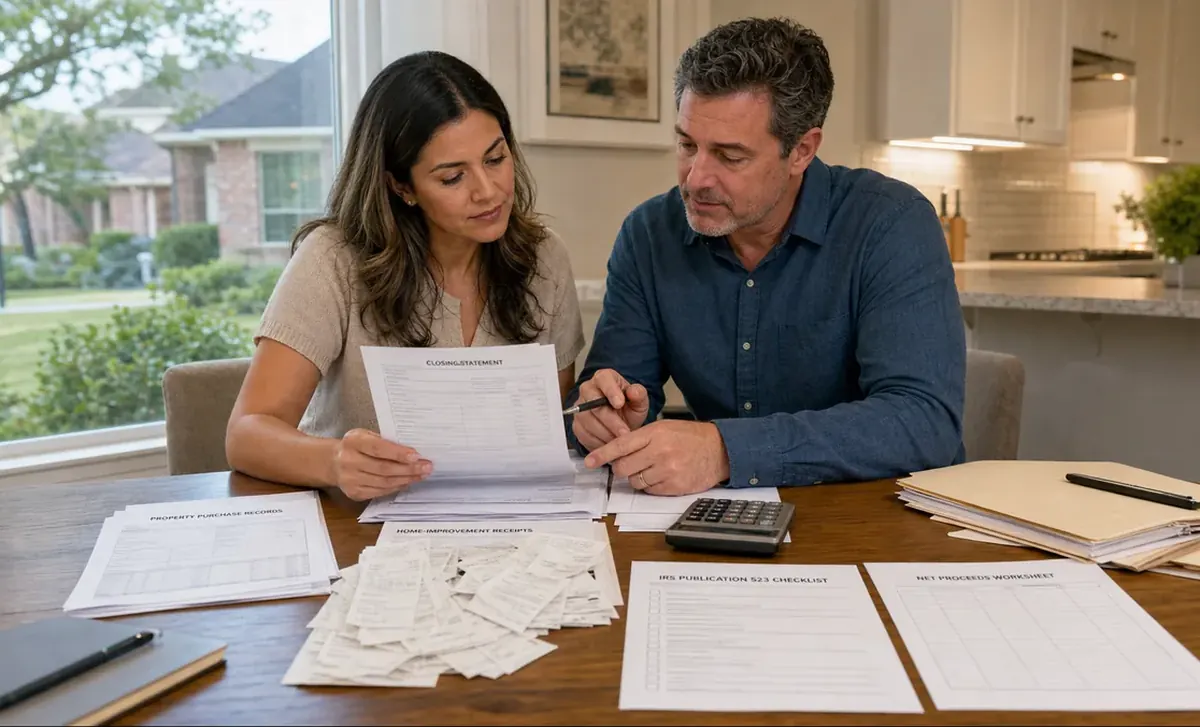
In recent years, cash home sales have surged in Houston's real estate market, offering homeowners faster closings than traditional financing-dependent transactions. Federal tax obligations for cash sales remain identical to financed transactions, with capital gains calculations determining your primary tax liability.
Harris County processes thousands of cash residential transactions annually, requiring proper federal tax reporting regardless of payment method. This guide covers federal capital gains requirements, Texas state tax advantages, documentation needs, and compliance strategies for Houston homeowners completing cash sales.
Cash Sale Tax Overview for Houston Homeowners
In Houston real estate, cash sales involve buyers purchasing property with immediately available funds instead of mortgage financing. Payment methods include certified funds, wire transfers, or cashier's checks that clear without financing contingencies. Reportedly, Houston's cash sale market has grown substantially in recent years due to competitive conditions and investor activity.
Federal tax treatment remains consistent between cash and financed sales regarding capital gains obligations. The IRS calculates taxes based on profit realized from the sale rather than the payment method. Capital gains equal your sale price minus your adjusted basis, which includes original purchase price plus qualifying improvements minus business-use depreciation.
Texas offers significant advantages through its absence of state income tax, allowing Houston sellers to avoid state-level capital gains taxation. This benefit applies to all real estate transactions within Texas. At closing, Harris County property tax obligations transfer to buyers through standard proration calculations.
Federal reporting requirements include Schedule D filing for significant capital gains and proper transaction documentation. The Section 121 exclusion allows qualified homeowners to exclude up to $250,000 for single filers or $500,000 for married couples filing jointly from their taxable capital gains.
GetHomeCash Simplifies Houston Cash Sales
GetHomeCash operates as a direct cash buyer across the US, buying Houston homes with seven-day closing capabilities while accommodating seller timelines. The company eliminates traditional sale complexities by buying properties as-is without requiring repairs, staging, or extensive cleaning.
Their process covers standard closing costs and charges no agent commissions, allowing sellers to retain more proceeds from their home sale. GetHomeCash handles all transaction paperwork and logistics, removing the burden of listings, showings, and extended negotiations of traditional sales.
Houston homeowners benefit from working with experienced cash buyers, who provide clear documentation and professional transaction handling that simplifies tax reporting. Their approach allows sellers to focus on understanding tax obligations rather than managing complex transaction details.
GetHomeCash offers Houston homeowners a hassle-free experience for immediate sale needs and supports tax compliance through professional documentation and efficient closing processes.
Sales Tax Rules for Houston Cash Home Sales
Sales tax doesn’t apply to residential real estate transfers in Houston or Texas. The transfer of real property ownership is exempt from state sales tax regardless of cash payment or financing methods. This exemption benefits Houston homeowners since purchase prices aren’t affected by additional sales tax.
Sales tax considerations may be triggered in limited scenarios when personal property transfers separately alongside home sales. Examples include furniture or appliances sold distinctly from the home, or business equipment if the property served commercial purposes. The key distinction involves whether items are integral real estate components or separate personal property transactions.
When fixtures are removed and sold separately instead of included in the home sale, these transactions might generate sales tax obligations. Sellers must report and remit appropriate taxes to the Texas Comptroller of Public Accounts in applicable situations. Clear documentation distinguishing between real and personal property components ensures compliance.
Most Houston homeowners completing standard residential cash sales encounter no sales tax obligations. This eliminates this complexity from their transaction considerations.
Property Tax Implications for Cash Sales in Houston
Cash sales impact property tax obligations through Harris County's ownership change notification process. When property ownership transfers, it triggers potential reassessment by Harris County Appraisal District for future tax calculations. The cash payment method creates no immediate additional property tax obligations beyond standard transfer procedures.
As of closing dates, property tax responsibility transfers to new owners, with prorations ensuring each party pays their proportionate current tax year share. Cash payment methods do not alter standard proration calculations or create additional tax burdens. Title companies handle these calculations during closing.
Harris County Appraisal District may use sale prices as market value evidence for future property tax assessments affecting new owners. This reassessment process applies equally to cash and financed transactions. Sale price influence on assessments represents standard practice rather than cash sale-specific considerations.
Sellers must ensure current property taxes are paid through closing dates to avoid liens or transfer complications. Proper property tax handling prevents delays and ensures smooth ownership transitions during cash sale closings.
Federal Tax Requirements for Cash Sale Tax Implications in Houston
The primary consideration for Houston cash sales, focusing on capital gains tax calculated as the difference between sale price and adjusted basis. Adjusted basis includes original purchase price plus qualifying improvements minus any depreciation from business use.
The IRS distinguishes between short-term and long-term capital gains based on ownership duration exceeding one year. Long-term gains qualify for zero, 15, or 20 percent tax rates based on 2024 income. Short-term gains from properties owned one year or less face ordinary income tax rates.
Capital Gains Calculation Process
Homeowners need records of original purchase price, closing costs, and qualifying improvements for calculating adjusted basis. Improvements that add value, extend useful life, or adapt properties to new uses typically qualify. Home maintenance and repairs generally do not qualify unless part of larger projects.
Section 121 Exclusion Benefits
Houston homeowners may qualify for Section 121 exclusion allowing up to $250,000 capital gains exclusion for single filers or $500,000 for married couples filing jointly. Qualification requires ownership and primary residence use for at least two of the five years before the sale. This exclusion applies once every two years.
When capital gains on Schedule D of federal tax returns. Form 8300 reporting for cash transactions over $10,000 usually doesn’t apply to standard residential sales unless specific business circumstances exist.
Texas State Tax Benefits for Houston Cash Sales
Texas offers significant advantages for Houston cash sales due to the absence of state personal income tax, eliminating state-level capital gains taxation. Houston sellers retain more proceeds compared to states with income taxes on capital gains from property sales.
This tax advantage applies to all Texas real estate transactions regardless of payment method. Cash, financed, and other sales benefit equally from no state income tax. Property appreciation gains are subject only to federal taxation.
The Texas tax environment benefits Houston residents with significant property appreciation in recent years. According to industry reports, Houston home values have risen substantially since 2020, generating potential capital gains for long-term homeowners.
State-level penalties for non-compliance relate to property tax obligations administered by Harris County rather than income-based taxes. Ensuring current property taxes are paid through closing prevents state-level complications during ownership transfers.
Documentation Requirements for Cash Sale Tax Compliance
Comprehensive record-keeping ensures tax compliance and supports potential IRS inquiries regarding Houston cash sales. Essential documents include original purchase agreements, closing statements, and all improvement documentation during ownership.
Primary Transaction Documents
Closing statements provide critical tax calculation information including sale prices, closing costs, and transaction adjustments. They serve as primary evidence for federal tax reporting and should be retained with other tax records. Maintain documentation for real estate commissions, attorney fees, title insurance, and selling expenses.
Home Improvement Records
Documentation of qualifying home improvements is essential for adjusted basis calculations and capital gains tax minimization. Qualifying improvements include additions, renovations, major repairs, and system upgrades like HVAC, electrical, or plumbing work. Maintain receipts, contracts, and permits for all projects.
Federal Reporting Requirements
Schedule D filing with annual tax returns is required for significant capital gains. Cash sale payment methods don’t alter reporting requirements, but proper documentation ensures accurate calculations and supports reported figures during audits.
Organize records chronologically and maintain both physical and digital copies for security. The IRS recommends keeping tax documents for at least three years after filing, though longer retention periods provide additional protection for significant transactions.
Tax Exemptions for Houston Cash Sales
Section 121 capital gains exclusion represents the most significant tax benefit for Houston homeowners selling primary residences. It allows substantial capital gains exclusion from federal taxation. Single taxpayers can exclude up to $250,000 while married couples filing jointly can exclude up to $500,000.
Qualification Requirements
Homeowners must satisfy ownership and use tests by owning the home for at least two years during the five years before the sale. Primary residence use must occur for at least two years during that same period. Ownership and use periods do not require continuous or concurrent timing.
Frequency and Special Circumstances
This exclusion applies every two years. It provides substantial value for long-term homeowners facing significant property appreciation. Military personnel, Foreign Service members, and individuals with qualified work-related relocations may qualify for partial exclusions without meeting full two-year requirements.
Additional Tax Strategies
Homeowners might time sales to coordinate investment losses that offset gains, requiring professional tax planning. Properties used for business may require depreciation recapture taxed at ordinary income rates instead of capital gains rates.
Current tax law changes and new limitations may affect specific situations, making consultation with tax professionals valuable for maximizing exemptions and ensuring compliance.
Non-Compliance Penalties for Cash Sale Tax Obligations
IRS penalties for improper reporting or non-payment of cash sale taxes include fines and interest from original due dates until full payment. These penalties significantly increase total tax burdens beyond original amounts owed.
Accuracy-Related Penalties
The IRS imposes 20% accuracy-related penalties on tax underpayments from negligence or substantial income understatement. Cash home sales may trigger these penalties if capital gains reporting is omitted or tax calculations are incorrect. More severe penalties apply for fraud or intentional regulation disregard.
Interest and Audit Risks
Interest charges accrue daily on unpaid taxes using quarterly IRS-set rates, compounding from original due dates. Typically, interest can’t be waived even with penalty relief and continues until full payment. Non-compliance may trigger audits examining multiple tax years beyond the original home sale transaction.
Professional Compliance Support
Maintaining accurate records, reporting required income, and consulting tax professionals for complex transactions helps avoid complications. Professional tax advice costs represent small fractions of potential penalties while providing compliance assurance and peace of mind.
Tax Consultation for Houston Cash Sales
Qualified tax professionals provide essential guidance for Houston homeowners navigating complex cash sale tax situations involving significant capital gains, multiple properties, or business property use. Certified Public Accountants, tax attorneys, and enrolled agents have the expertise for compliance and optimizing tax positions.
CPA Services and Benefits
CPAs offer tax planning and preparation services, helping homeowners understand the their tax obligations and identify tax minimization opportunities. Services include capital gains calculations, exemption eligibility determination, and proper federal tax return reporting. Many CPAs provide year-round planning coordinating home sales with other financial decisions.
Specialized Legal Support
Tax attorneys specialize in complex tax law issues and represent clients during disputes with tax authorities. They provide both planning advice and advocacy services for high-value transactions or potential legal complications. Tax attorneys are valuable for unique circumstances or IRS examinations.
Enrolled Agent Services
Enrolled agents are licensed federal tax practitioners who can represent taxpayers before the IRS while providing cost-effective services for straightforward transactions. They maintain the expertise for proper federal tax regulation compliance.
When selecting Houston tax professionals, consider referrals from trusted financial advisors, attorneys, or homeowners completing similar transactions. The Texas Society of CPAs helps locate qualified practitioners with relevant real estate taxation experience.
Additional Cash Sale Tax Topics for Houston Homeowners
Small business owners selling business-use property face complexities beyond residential sales due to depreciation recapture requirements. Business property sales may trigger ordinary income tax rates on previously claimed depreciation deductions, applying even when overall transactions result in capital gains eligible for preferential rates.
Section 1031 like-kind exchanges may allow business property owners to defer capital gains taxes by reinvesting proceeds into similar property within specified timeframes. Cash sales typically don’t qualify for like-kind exchange treatment unless structured through qualified intermediaries.
Vehicle Cash Sale Tax Requirements
In Houston, vehicle sales are subject to Texas sales tax, unlike real estate transactions. Private party vehicle sales require buyers to pay sales tax during registration, calculated on the higher of sale price or standard presumptive value set by Texas Department of Motor Vehicles.
Sellers must provide proper documentation including signed titles and bills of sale showing actual purchase prices. Underreporting sale prices to reduce buyer tax obligations violates Texas law and creates penalties for both parties.
Personal Property Transaction Rules
Personal property sales generally create no taxable income unless items sell for more than original purchase prices. Most belongings depreciate, resulting in non-deductible losses for personal use items. However, collectibles, artwork, or appreciating property may generate taxable capital gains when sold for profit.
Casual personal item sales usually require no formal reporting unless gains are substantial or selling activity constitutes business operations. The IRS considers sale frequency, profit motive, and time devoted to selling when determining whether casual sales constitute taxable business income.
Conclusion
Houston homeowners face cash sale tax implications that center on federal capital gains obligations, state tax advantages, and proper documentation. Texas offers benefits through no state income tax, while federal compliance is essential. The Section 121 exclusion offers relief for qualifying primary residence sales, making proper planning crucial. This information provides general guidance and shouldn’t substitute for professional tax advice tailored to individual situations and current tax law.
.jpg)