
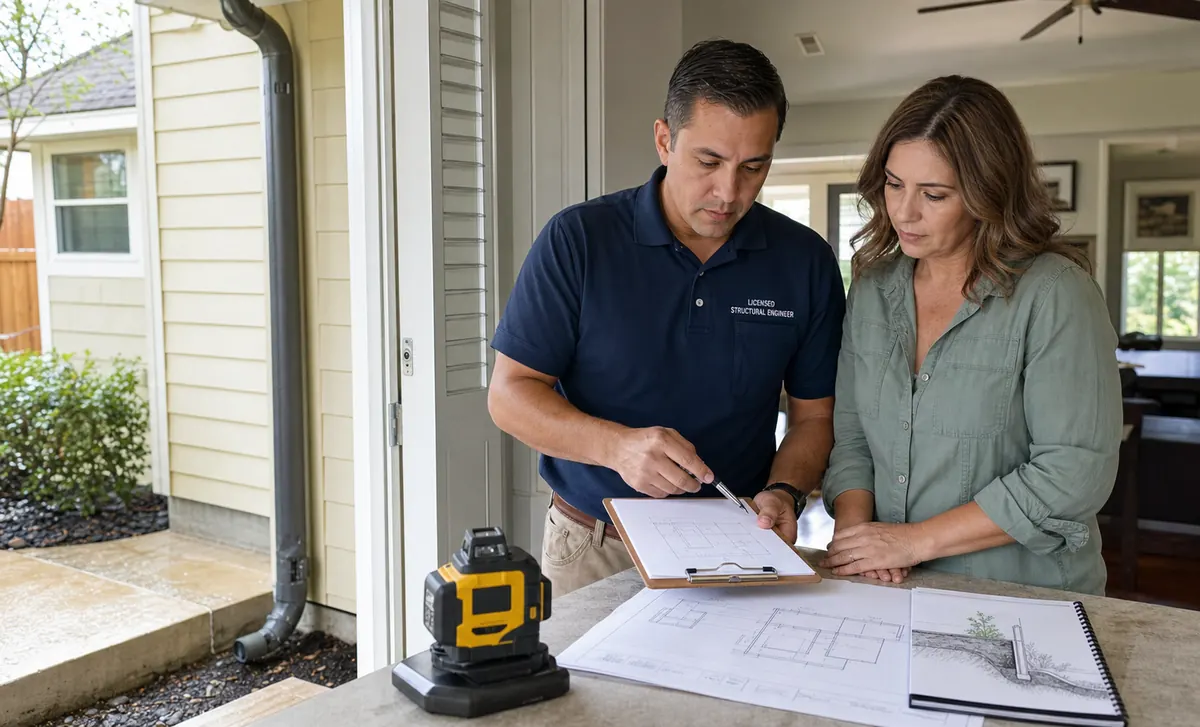
This guide explains foundation inspection houston tx complete guide, the decisions it affects, and the facts to verify before you act. Confirm time-sensitive tax, legal, financial, safety, and local-rule details with the linked primary sources and a qualified professional.
In this guide, you will learn:
- what foundation inspection houston tx complete guide means in practice;
- which inputs, rules, costs, or assumptions change the answer;
- the step-by-step decision process;
- the primary sources to check; and
- when to stop and ask a qualified professional.
The short answer
A foundation inspection documents observable conditions and, depending on scope and provider, may include measurements, analysis, and recommendations. It does not guarantee that a foundation will never move or establish a repair plan beyond the inspection’s stated scope. Before acting, confirm who performed the review, their credentials, what was inspected, limitations, measurements, conclusions, and whether engineering design or another specialist is required.
For one direct-sale alternative after you understand the condition record, see how the GetHomeCash process works.
Who this applies to
This guide is for Houston-area owners and prospective buyers deciding whether to monitor conditions, obtain an inspection, request engineering review, compare repair proposals, disclose known information, negotiate a transaction, or evaluate an as-is sale. A licensed engineer, inspector, contractor, plumber, attorney, insurer, lender, or other specialist may be needed depending on the question.
Inputs and definitions
- Foundation type: Record the construction described in available plans, prior reports, and the inspector’s stated observations.
- Inspection scope: Confirm whether the engagement covers visual observations, floor elevations, drainage, plumbing indicators, crawl-space access, structural analysis, repair design, or follow-up.
- Condition record: Keep dated photographs, diagrams, readings, limitations, prior reports, repairs, warranties, drainage work, plumbing work, and relevant weather context.
- Decision question: Define whether you need a condition snapshot, engineering opinion, repair scope, transaction disclosure support, bid comparison, or monitoring plan.
- Qualified provider: Verify the professional’s identity, role, license or registration when applicable, insurance, conflicts, and written scope.
Step-by-step process
- Define the decision. Write the question the inspection must help answer and the deadline.
- Assemble the record. Gather prior reports, repair documents, warranties, surveys, plans, photographs, disclosures, drainage work, and plumbing records.
- Select the appropriate provider. Verify credentials and request a written scope, fee, deliverables, limitations, and timing.
- Prepare access. Identify visible concerns and ensure agreed areas can be safely accessed without concealing or altering conditions.
- Review the report. Separate observations, measurements, interpretations, exclusions, and recommendations. Ask the author to clarify ambiguous language.
- Choose the next qualified action. Monitor, obtain specialist review, investigate drainage or plumbing, request repair design and bids, update transaction documents, or compare an as-is path as the evidence supports.
Worked example with assumptions
Assume an owner notices recurring interior cracks and a sticking door. The owner preserves dated photographs, locates an older report and repair warranty, and hires an appropriately qualified provider under a written scope. The resulting report records accessible conditions, methods, limitations, and recommendations. The owner then obtains any recommended engineering, drainage, plumbing, or repair review before comparing complete written options.
This example demonstrates a documentation sequence only. Similar symptoms can have different causes, and no result or repair outcome is promised.
Costs, risks, and common mistakes
- Hiring by price alone without matching credentials and scope to the decision.
- Treating cosmetic symptoms as proof of a specific structural cause.
- Comparing repair totals without matching methods, quantities, exclusions, permits, testing, warranties, and restoration work.
- Ignoring drainage, plumbing, trees, prior repairs, access limitations, or changes since an older report.
- Using an inspection outside its stated date, scope, or purpose.
- Concealing known information or assuming a report replaces transaction-specific disclosure or professional advice.
Rules or facts to verify now
Verify whether the work you need falls within Texas engineering or real-estate inspection practice, the provider’s current credential, the written scope and limitations, applicable permit requirements, and transaction-specific obligations. The Texas Board of Professional Engineers and Land Surveyors regulates engineering practice, and the Texas Real Estate Commission regulates Texas real-estate inspectors. Use official sources and qualified advice for your facts.
Primary sources
- Texas Board of Professional Engineers and Land Surveyors
- TBPELS — engineer roster search
- Texas Real Estate Commission
- TREC — Standards of Practice for Inspectors
- TREC — Seller’s Disclosure Notice
Frequently asked questions
Who should inspect a foundation?
Choose a provider whose verified credential and written scope match the question. A real-estate inspection, structural engineering evaluation, drainage review, plumbing test, and repair estimate are different services.
Does a crack prove foundation failure?
No. Record its location and change over time, but do not diagnose a cause from one symptom. An appropriately qualified professional should evaluate relevant conditions.
What should a written report include?
Look for the client and property, date, provider, scope, methods, accessible areas, observations, measurements when included, limitations, conclusions, and recommended next actions.
How should repair proposals be compared?
Compare equivalent scope: diagnosis, method, quantities, drainage or plumbing work, permits, testing, interior restoration, warranty terms, schedule, payment, and exclusions.
How we prepared this guide
We reviewed the primary sources linked in this article and checked time-sensitive details on July 21, 2026. This content is educational and does not replace advice from a qualified professional who understands your facts and jurisdiction.
Page owner: Dennis Shirshikov — Content owner
Last substantive review: July 21, 2026
Next review due: October 21, 2026
Primary sources checked: TBPELS and TREC
Claims/evidence record: Editorial source record maintained with this page
Corrections: racheal@blueberrieproperties.com